Rear Wing Design
CAD + Engineering
GT3/GT4 Inspired Rear Wing
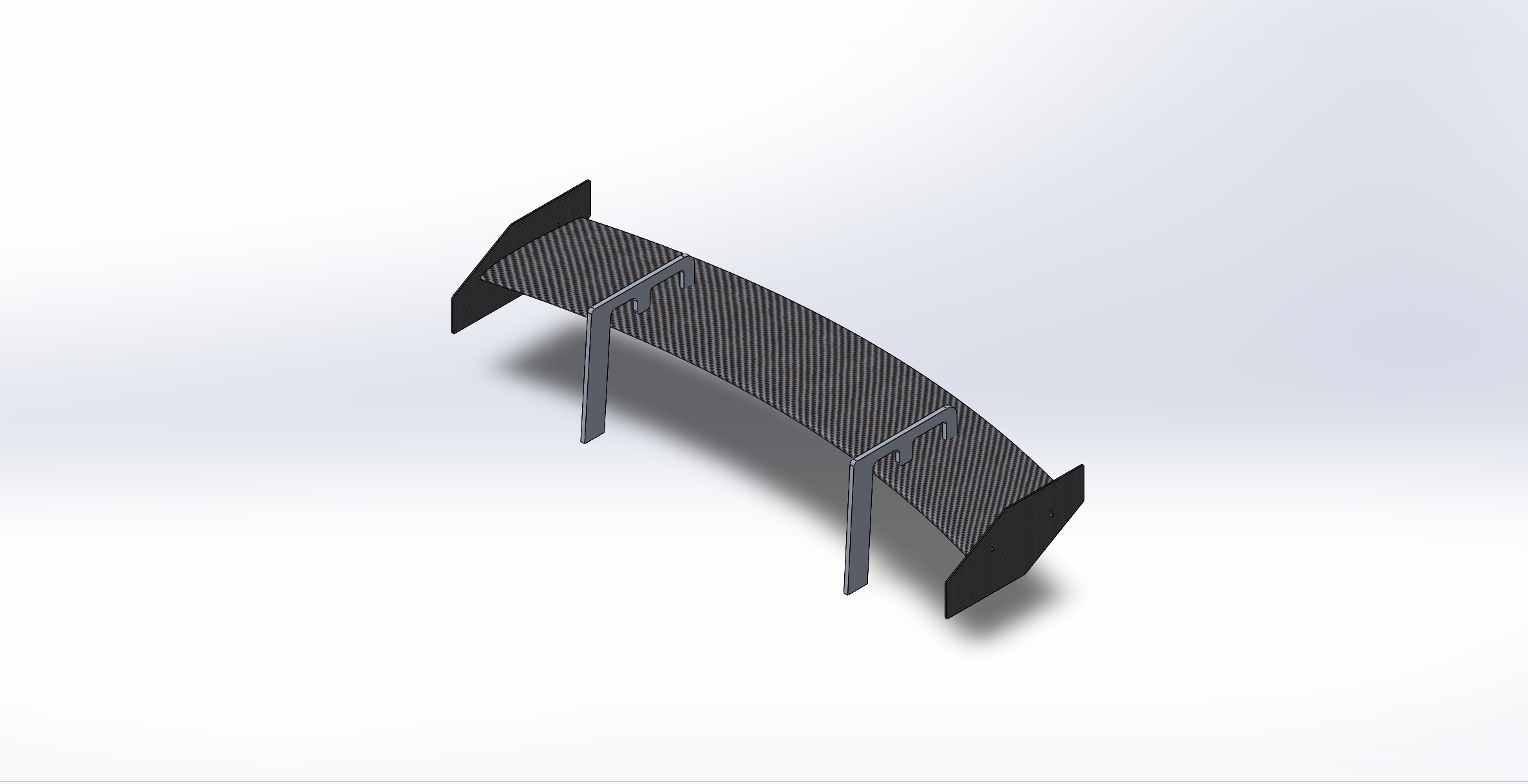
This report documents the design and development of a GT-style rear wing created as a first hands-on aerodynamics and mechanical design project. The objective was to model a realistic motorsport rear wing assembly in SolidWorks, with attention to manufacturability, structural integrity, and aerodynamic intent.
Airfoil
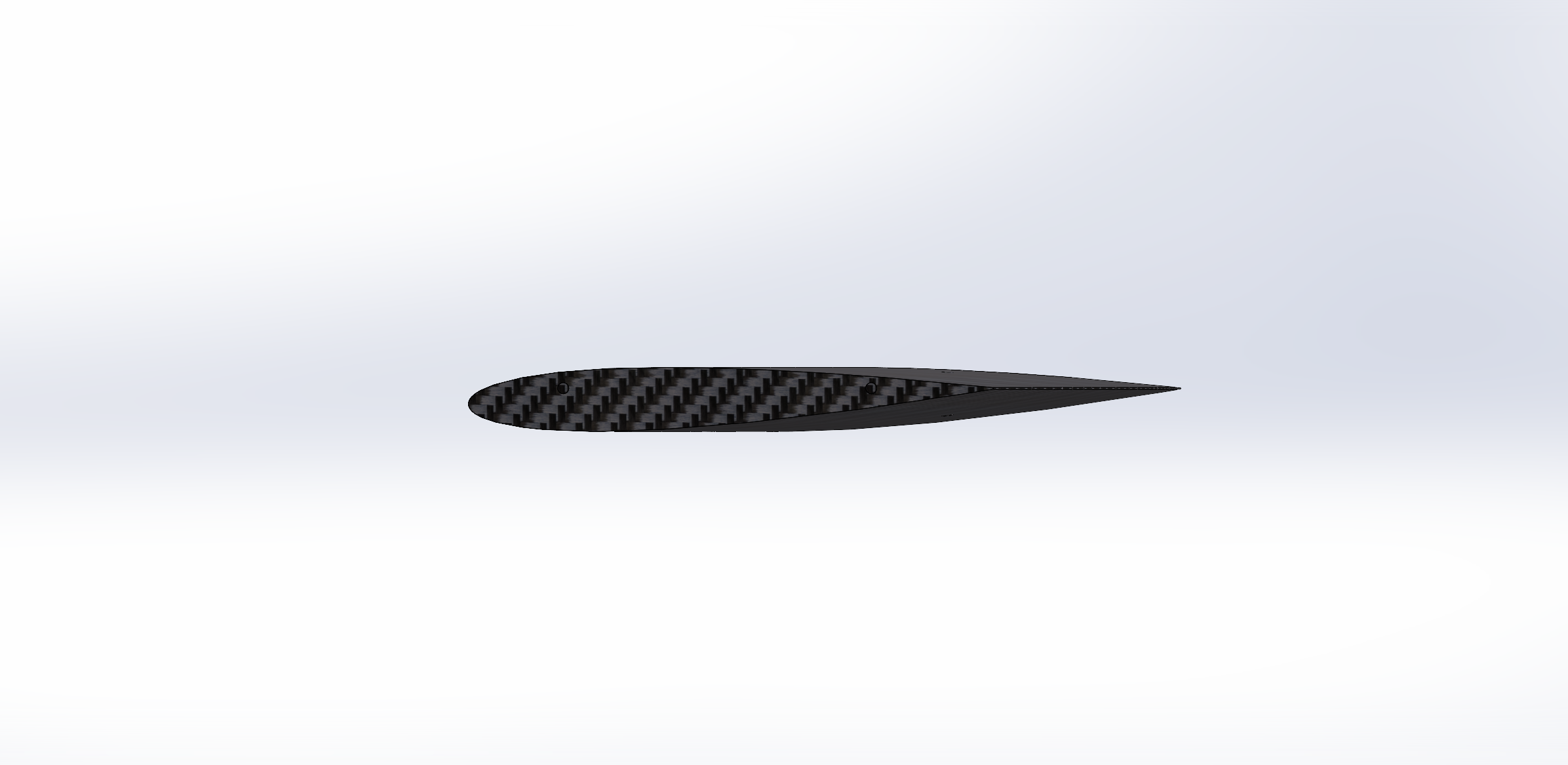
The wing element uses a NACA 0012 symmetric airfoil profile. The profile was selected for its widespread use in motorsport rear wings, predictable behavior at varying angles of attack, and ease of manufacture. The airfoil spans 1500 mm and is designed to operate with adjustable angle of attack via rear mounting slots.
.png)
Endplates
The endplates are manufactured from carbon fiber and are designed to reduce wingtip vortices while providing structural mounting for the wing and stanchions. A squared GT-style geometry was chosen to prioritize cornering stability and real-world race car design practices.
Stanchions
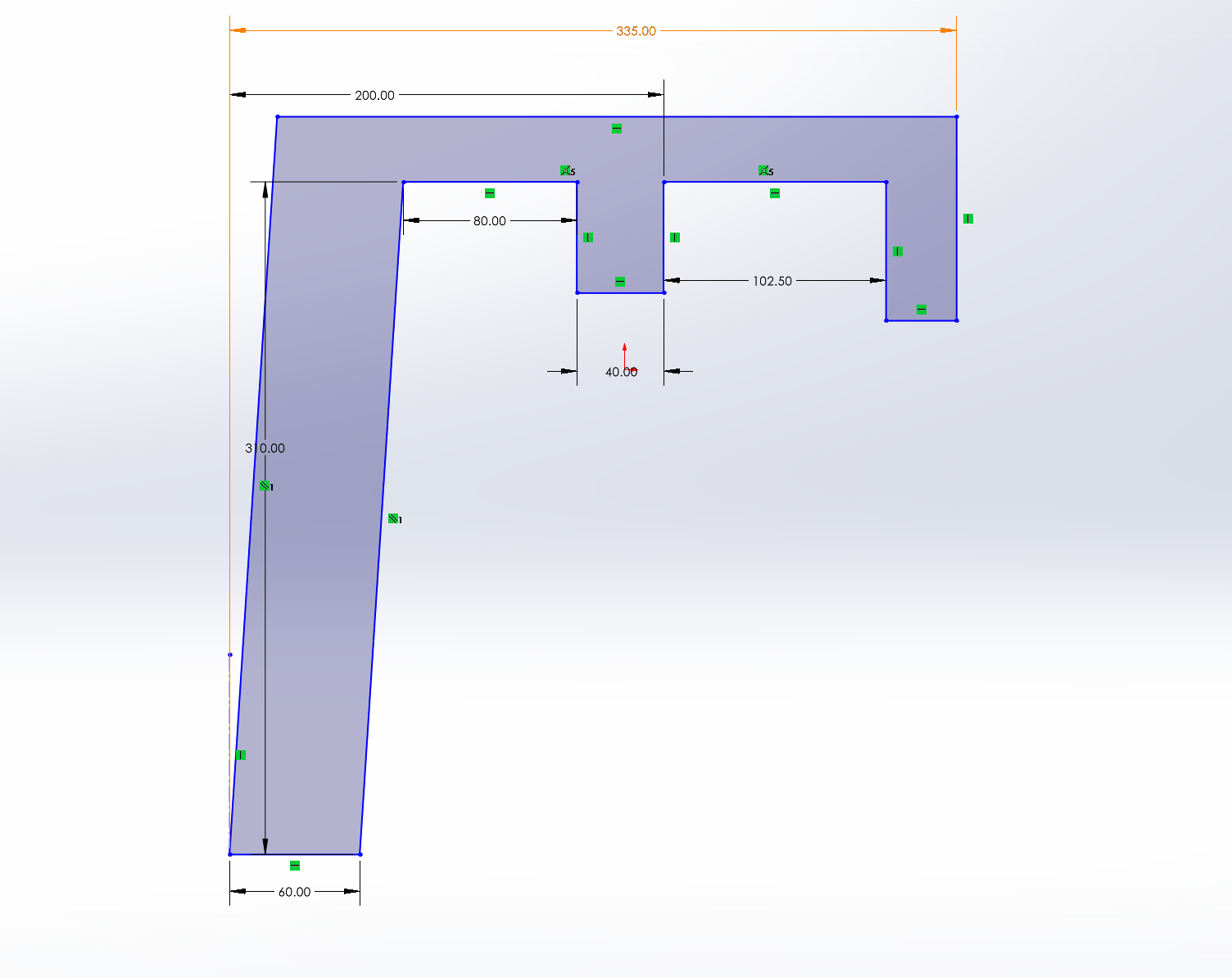
The wing is supported by top-mounted stanchions manufactured from 6061-T6 aluminum. This material was selected for its high strength-to-weight ratio, machinability, and common use in motorsport applications. The stanchion geometry balances rigidity with minimal aerodynamic obstruction.
Materials
Airfoil
Carbon Fiber Composite
Endplates
Carbon Fiber Composite
Stanchions
6061-T6 Aluminum
Fasteners
M6 Steel Hardware
Conclusion
This project represents a first practical attempt at designing an aerodynamic component for a motorsport application. The process emphasized CAD discipline, dimensional control, mechanical reasoning, and aerodynamic awareness. Future iterations would include CFD validation, structural FEA, and integration with a full vehicle model.